


During the Atlassian Team '26 Europe held in Amsterdam, we finally got to see the real meaning behind Atlassian's slogan shift of the event, focused on "AI-forward teams," making them at the center of their announcements during the duration of the event, from October 6-8. Among the main announcements, we got Rovo Work, great Loom features, a richer Teamwork Graph, and System of Work by default, and new AI capabilities across Atlassian and Marketplace apps. Let's go through the most relevant announcements:
Across the keynotes, Atlassian connected these announcements to a broader ambition: making AI useful throughout the work lifecycle. The Teamwork Graph supplies organizational context, Rovo helps teams act on it, and Atlassian's apps provide the places where people plan, collaborate, and review results.
For Jira users, there were also announcements from the perspective of Atlassian and Marketplace Apps, meaning that work should be looked at beyond just individual AI features, allowing them to understand how to articulate, execute, gather knowledge, and govern work, making it more connected across teams and the Enterprise.
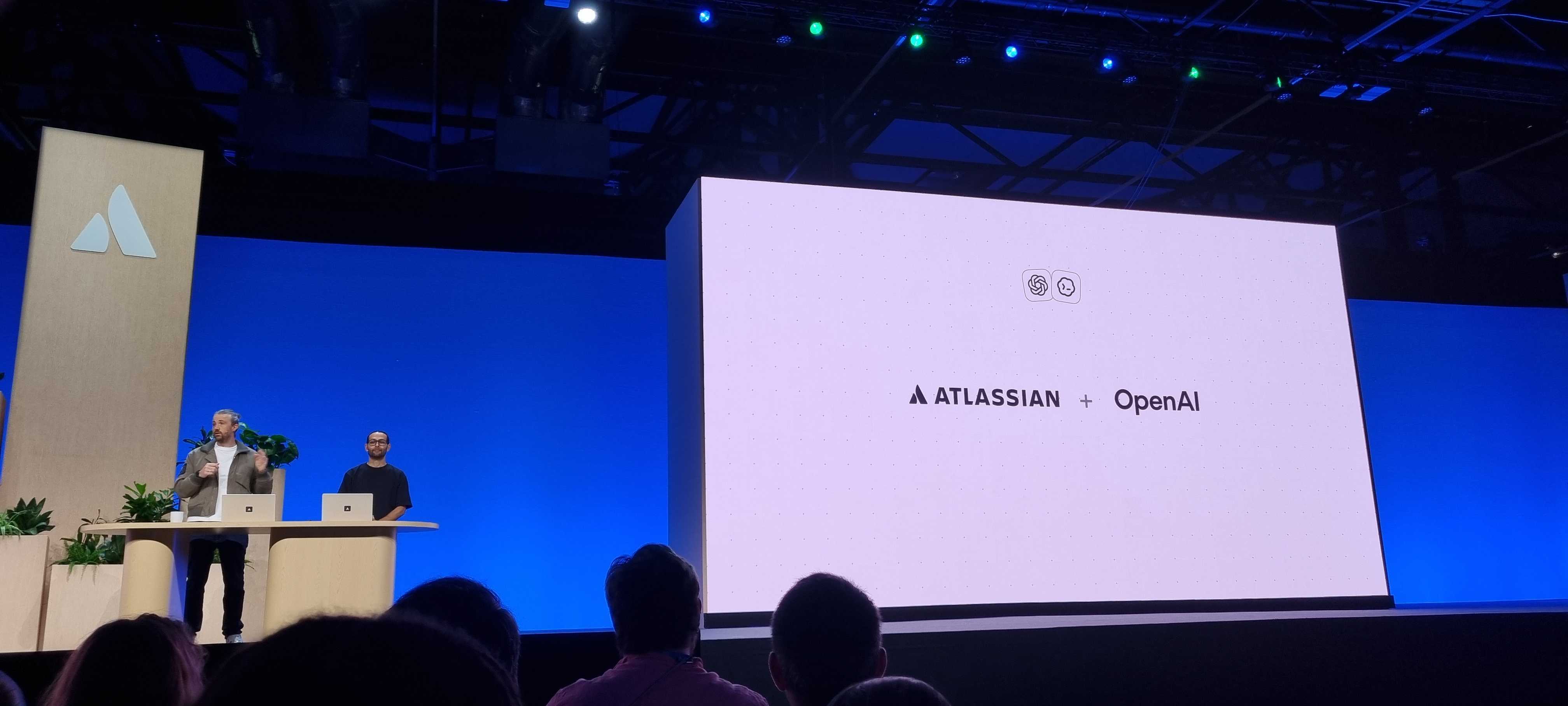
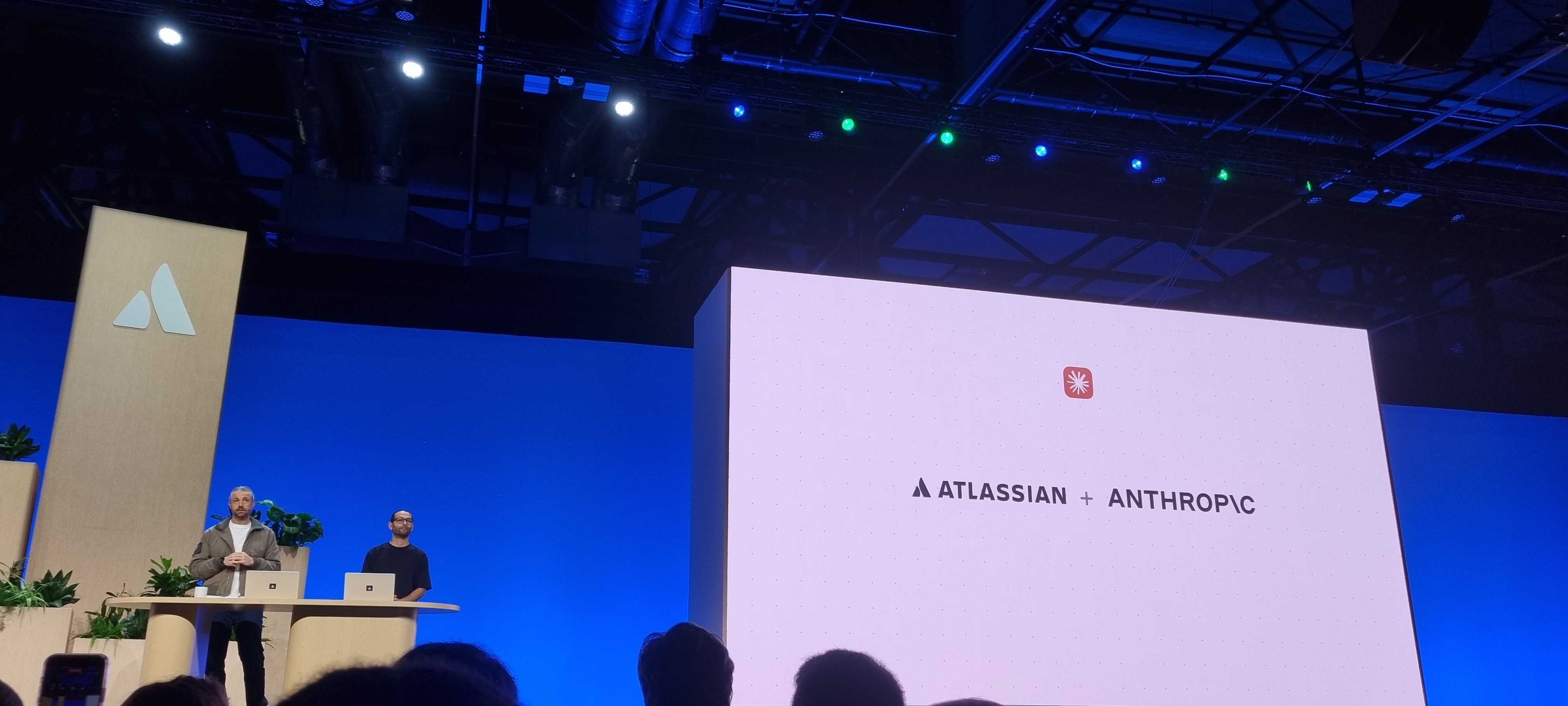
Among the many announcements delivered on the Founders Keynote, headed by Atlassian Co-Founder and CEO Mike Cannon-Brookes, and accompanied by different Atlassians such as Tamar Yehoshua, Chief Product & AI Officer, Sherif Mansour, Head of AI, and Taroon Mandhana, CTO, AI and Teamwork, two announcements will dictate future interesting announcements, and that would be the expansion of the partnership with OpenAI and Anthropic.
The partnership with OpenAI outlined deeper integrations under development, including agents picking up work items and bringing local session history back into shared team workflows. Read more about this partnership
With Anthropic, Atlassian highlighted close collaboration on the rebuilt Atlassian MCP service and its experience in Claude, offering more than 220 tools, extending what compatible agents can do across Atlassian apps while retaining permissions and controls. Read more about this announcement.
These two partnerships leave different teams the practical benefit of choice, allowing them to work with their preferred tools and making their work faster and smarter.
The Teamwork Graph connects organizational knowledge and relationships across people, work, and tools. And until this Team, this has been a philosophical concept that hasn't been so palpable. This showed how it acts as a base for all the announcements made.
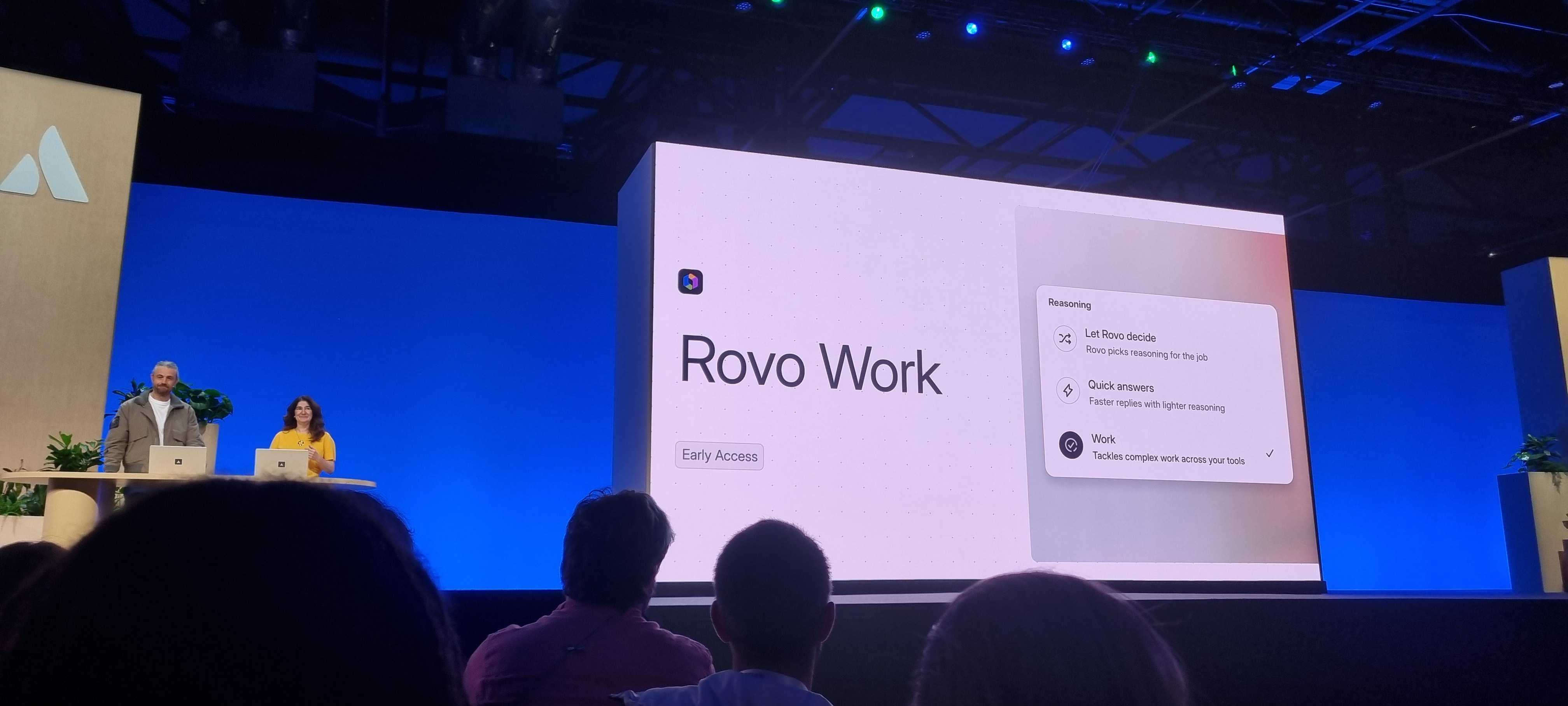
With the announcement of Rovo Work, it's now possible to handle tasks that require several steps from different devices (with the announcement of Rovo Mobile). This new mode of Rovo allows you to solve complex tasks: as a user sets a goal, Rovo proposes a plan, and the person shapes that before execution. It can work across Jira, Confluence, and connected tools, including running code in a governed sandbox. See the announcement about Rovo Work and the Rovo Mobile App.
Planner addresses an important step before the development process begins and determines what should be built.
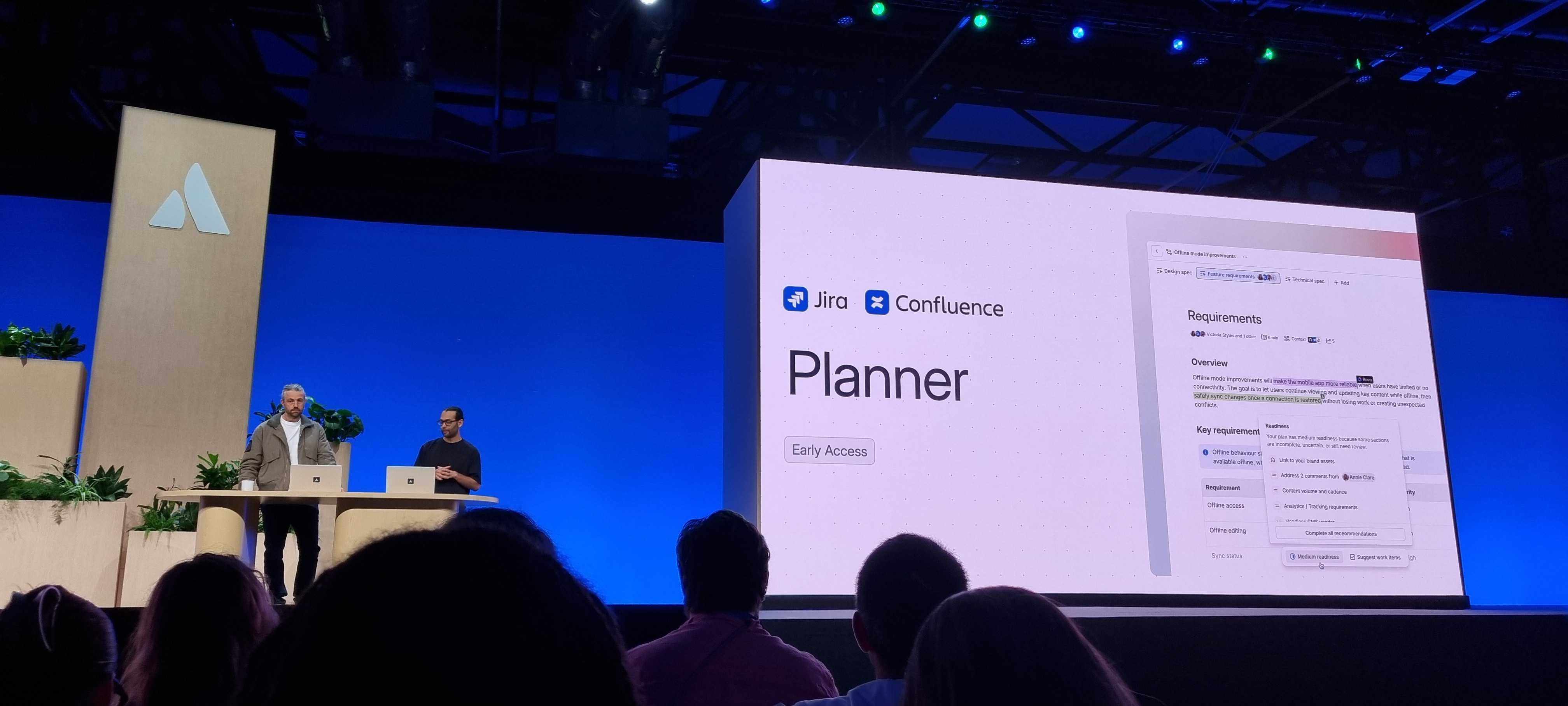
Starting from a request, it asks questions about scope, constraints, and success criteria, using the Teamwork Graph context to produce a Confluence plan that stakeholders can review, then break it into an approved plan with sequenced Jira work items.
Planner was announced as soon-to-be-released, with private early access. Learn more about it here.
This time, Loom started to show that a tool acquired by a bigger company doesn't mean it will be killed. In this case, it's happening the opposite. Among the shiniest announcements, Loom was present:
Record for Agent: Available in an open beta. This feature turns Loom recordings into an audio and visual brief that an agent can act on. Teams can show a product flow or explain feedback, then use that context to create work items or other outputs. Learn more.
AI Overlays: This one was definitively one of the favorites. This feature automatically adds visual elements such as animated titles, key-point highlights, and opening or closing cards to recordings. Announced in early access, the feature helps teams to emphasize important information without manually editing every visual. See the announcement.
Interactive PR Reviews: This new feature helps code reviewers to to understand a pull request before examining its details.
Agents can generate a narrated walkthrough of a Bitbucket pull request, explaining the change's intent, important files, and implementation decisions, allowing the recording to sit in the pull request description alongside the code and the related Jira context. This will be shipped soon in a closed early access. Learn more about it.
This is some sort of home page for AI-generated work that allows you to locate them and reuse them if that's the case. From a plan to an interactive report, everything's centralized now.
Atlassian introduced the Artifacts app as a desirable home for AI creations that can receive persistent URLs, coming from external AI tools, and appear through links in Confluence, Jira, and Slack, becoming indexed in the Teamwork Graph under enterprise permissions. Learn more about this announcement.
Another of the most clapped announcements was this one, right here. This rollout of inference restricted to models hosted within the EU addresses the needs of European organizations the possibility to address where AI processing takes place, adding an important consideration alongside the location where app data is stored.
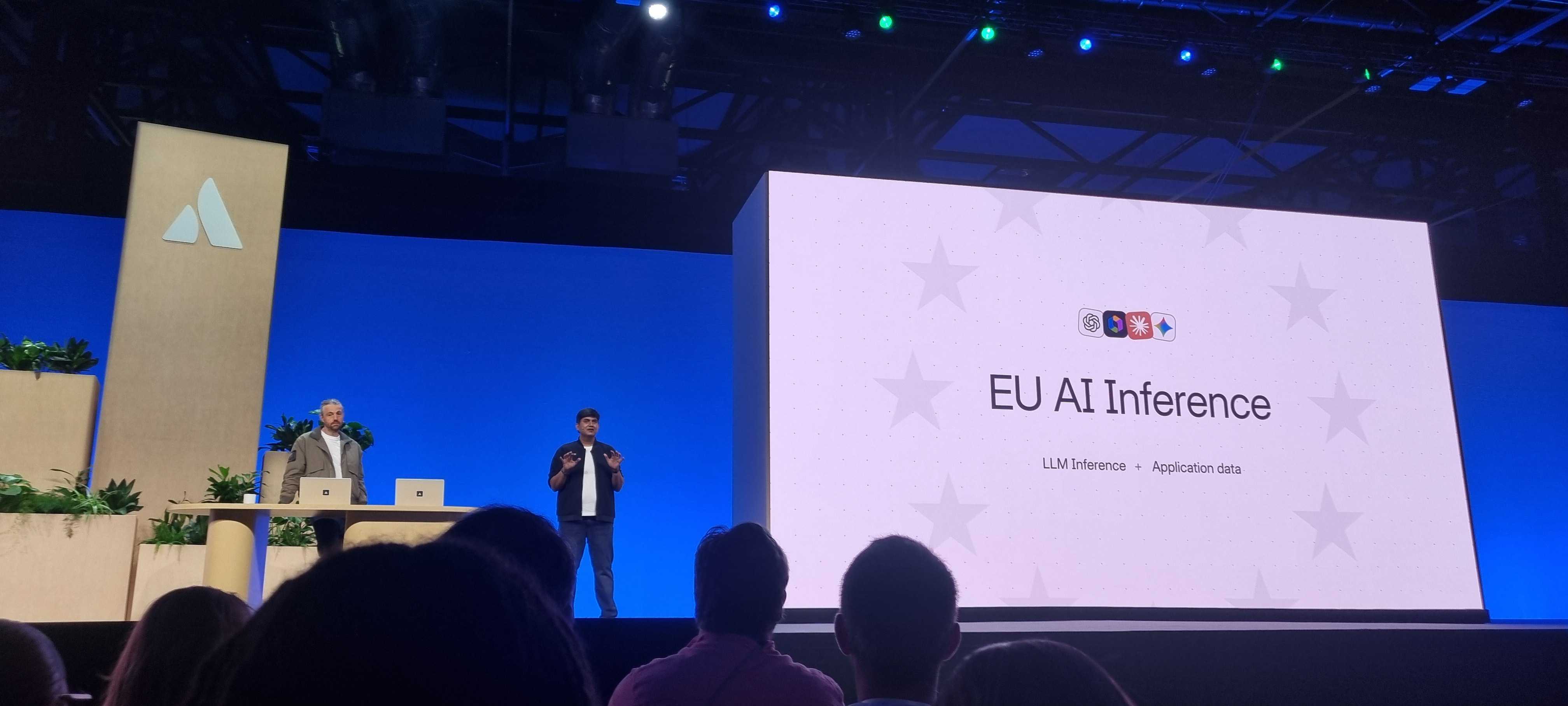
For enterprise AI, this distinction matters. Teams need to understand where their information is processed as well as who can access it. Availability and coverage should be checked for the relevant Atlassian environment as the rollout progresses.
This announcement also sits alongside broader governance work, including agent accounts and non-human identity inventory. Together, these developments address the controls organizations need as agents take on more work across their systems. Read more about the EU Inference announcement.
Alongside the direction Atlassian is taking towards AI, Deiser Apps (part of Devoteam) introduced an AI feature to make the process of managing projects in Jira simpler with Projectrak for Jira. Allowing it to capture what truly matters from project meeting context.
This assistant extracts project-related takeaways, including decisions, actions, risks, and next steps, and summarizes the important information into a document. This also connects meeting information with project maintenance by reading an uploaded transcript, proposing changes to project information, and asking for approval before applying them. As you can see in the video:
This is a straightforward benefit for the PMO, given it turns discussions into a concise summary, helping teams review what was agreed, and proposing project updates.
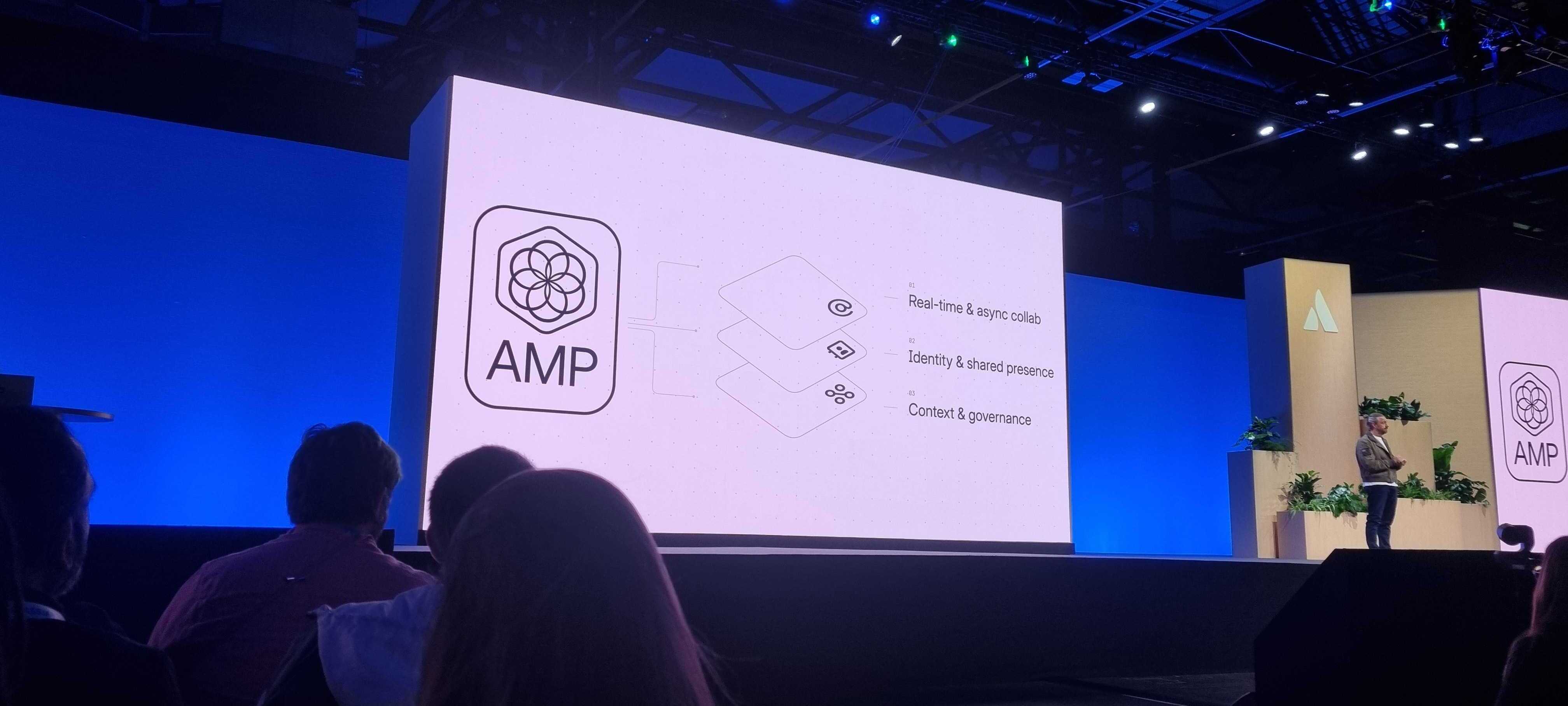
The Agentic Multiplayer Protocol (AMP) allows agent contributions to be visible within everyday teamwork for accountability. People can brief agents, review their outputs, and continue the conversation in the same places where they already are managing work. Agent identity, permissions, and attribution are part of the experience.
For example, for a project manager, this allows them to answer questions such as: Which agent performed the task? Who's responsible for it? What did it change?
This announcement began rolling out on October 6. Individual capabilities have their own release stages, so the announcement should not be read as universal availability. Check the founder's update.
Jira's announcements bring more coding agents into the workflows teams are already using. Teams can assign work to an agent, mention it in a comment, or use workflow events to trigger its work. Introducing Agent Sessions, announced to come soon, and closing early access is designed to connect local and cloud agent activity.
The introduction of Third-Party Folders in Confluence syncs content from external apps. Also, the new Confluence and Loom MCP toolslet-compatible agents can work with pages and video context. Explore these and other announcements from this collection here.
For teams that rewrite briefs for different audiences, this could reduce tons of work needed to keep everyone working from a consistent explanation.
The announcements for this collection apply the same contextual approach to support and operations such as:
The Solution Composer: A beta, uses natural language to help configure a service desk, including request types, workflows, SLAs, and portals. And now the Workforce Management in Jira Service Management, now generally available, combines scheduling, availability, capacity, and skill-based routing.
Proactive Service Management with early closed access focuses on detecting endpoint problems and resolving or routing them before employees need to report them. Read the announcements for this collection.
The updates for this collection were focused on keeping execution aligned when business priorities change.
Introducing Strategic Intelligence in Focus, it highlights priorities that need attention. Strategic Planning supports comparisons of funding and staffing in different scenarios. In Talent, Human and AI Capital Management adds visibility into AI usage and spending, while Workforce Skills helps identify capabilities and gaps.
These features were announced in open beta, alongside Agentic Updates, which draft progress from connected Goals, Projects, and Focus information for teams to refine and approve. Read the announcements for this collection.
Atlassian Team '26 Europe was one for the books; it showed how they are bringing agents further into planning, collaboration, delivery, and service management, at all levels. It's visible across those announcements, and the quality underlying context remains essential.
For Jira teams, that makes the next step practical: Keep project information current, make ownership explicit, and capture decisions where others can find them. Those habits help people today and give agents a stronger foundation for the work they take on.





No Comments Yet
Let us know what you think